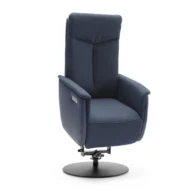
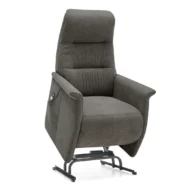
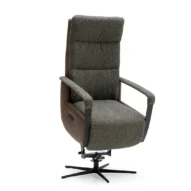
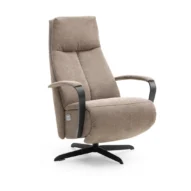
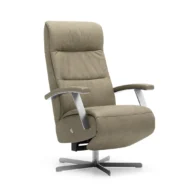
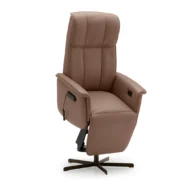
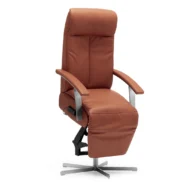

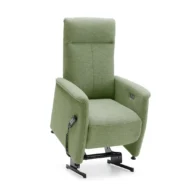
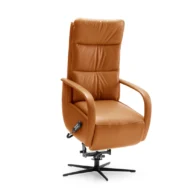
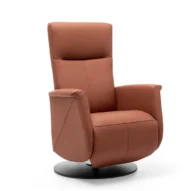
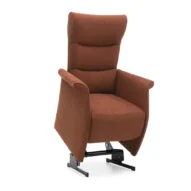
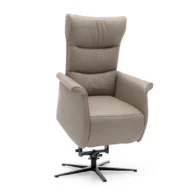
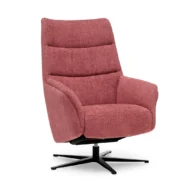

Choosing a lift chair without knowing how it actually works is like buying a car without knowing automatic from manual. Here’s the quick version, starting with the mechanism this page is about.
Power lift recliners for limited mobility
A lift chair reclines like a standard power recliner, then adds a lifting function that tilts the entire seat forward and upward, bringing you to a near-standing position with minimal effort. It’s built for anyone who finds getting up from a standard chair difficult due to arthritis, knee or hip pain, recent surgery, or reduced lower-body strength. Look for a “partial lift” stop (around 45°) so you can pause mid-rise base models that lift in one motion can feel unsteady. Some Canadian provincial programs help offset the cost; worth checking with an occupational therapist, since a documented recommendation can unlock funding most people don’t know about.
Power recliners; precision at the touch of a button
An electric motor replaces the lever press a button and the chair stops exactly where you want it. Dual-motor models add independent head and back control, with infinite-position recline instead of fixed stops. One catch: the chair needs to sit within reach of an outlet, so plan your layout first.
Wall-hugger or traditional it comes down to your room
A traditional lift chair needs real space behind it to recline fully. If your chair sits close to a wall, that space often isn’t there, and the backrest simply stops short. A wall-hugger mechanism solves this differently: instead of the backrest swinging back, the whole seat glides forward as you recline, so the back of the chair barely moves. In a smaller living room, that’s the difference between a lift chair that fits your space and one that doesn’t.
Before you start browsing, it’s worth knowing how much clearance your room actually allows and confirming which mechanism a lift chair uses before you commit to it.